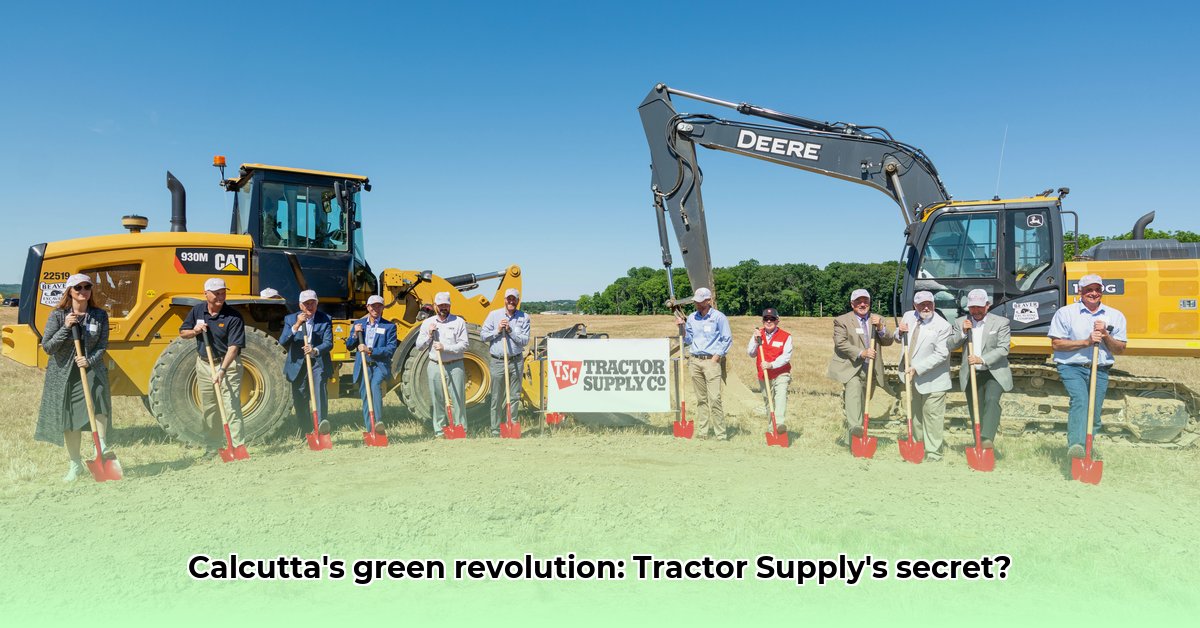
Assessing the Local Landscape: A Rural Retail Ecosystem
Stepping into the Tractor Supply store in Calcutta, Ohio, offers a glimpse into the heart of a rural community. More than just a retailer of farm equipment and supplies, it's a vital hub for local farmers. But how effectively does this familiar scene support the growing shift towards sustainable agriculture? Nestled among smaller towns like Wellsville and Chester, its strategic location makes it a potential linchpin for farmers spread across a wide geographical area. Easy access is undoubtedly beneficial, but does this translate to access to the appropriate sustainable farming resources? For further information on similar stores, check out this nearby Tractor Supply.
One key observation is the store's inventory. While stocked with the usual tools, parts, and animal feed essential for daily farming operations, the presence of supplies specifically designed for sustainable practices is less prominent. For instance, organic seeds and water-efficient irrigation systems seem less readily available than their conventional counterparts. While not entirely absent, these crucial items require more diligent searching, creating a less-than-ideal experience for farmers seeking eco-friendly options. A detailed online inventory analysis presents further challenges; the website, helpful in some aspects, lacks the precise detail needed for an in-depth assessment of the available sustainable farming resources. This lack of readily available digital information hinders a comprehensive analysis of Tractor Supply's role in supporting sustainable practices.
This scarcity, however, shouldn't be interpreted as a complete indictment of Tractor Supply's commitment to sustainability. Sustainable farming is a multifaceted system involving various interconnected elements. Farmer education, government support, land access, and market demand all significantly influence its success. While Tractor Supply can and should play a supportive role, it's unrealistic to expect it to single-handedly revolutionize the local agricultural landscape. It's a crucial part of the system, but not the system itself.
The Path Forward: Actionable Steps for a Sustainable Future
What concrete steps can be taken to foster sustainable agriculture practices in the region? Let's outline actionable strategies for different stakeholders:
Actionable Steps for a More Sustainable Future:
For Local Farmers:
- Short-Term (0-1 Year): Directly engage Tractor Supply staff to request specific sustainable products. Explore alternative suppliers for harder-to-find items. Participate in local workshops on sustainable farming techniques.
- Long-Term (3-5 Years): Form a farmer cooperative to negotiate bulk purchases of sustainable goods. Advocate for government incentives supporting sustainable agricultural practices.
For Tractor Supply Management:
- Short-Term (0-1 Year): Conduct a comprehensive inventory review, prioritizing and expanding sustainable product lines. Engage directly with local farmers to understand their detailed needs and preferences.
- Long-Term (3-5 Years): Invest in employee training on sustainable agriculture. Collaborate with agricultural extension offices and ecological organizations to promote sustainable practices. Partner with local suppliers to source sustainable products.
For Local Government Agencies:
- Short-Term (0-1 Year): Offer financial incentives (grants, tax breaks) to farmers adopting sustainable methods. Fund educational programs promoting sustainable techniques. Invest in water conservation initiatives.
- Long-Term (3-5 Years): Develop regional strategies for sustainable agriculture, addressing land access and market development. Support research on sustainable farming best practices tailored to the local environment.
Limitations and Future Research
This analysis, like any study, has limitations. Further research is crucial to fully grasp Tractor Supply's overall impact on sustainable farming in the region. Detailed data on the sales of sustainable products and their correlation to local agricultural trends is vital. Farmer surveys can offer valuable insights into their experiences and unmet needs, guiding how stores like Tractor Supply can better serve their community. A thorough understanding of regional trends, available government subsidies, and the economic viability of sustainable farming in the area would enhance the analysis significantly.
Conclusion: Building a Collaborative Ecosystem
The connection between Tractor Supply's inventory and the success of sustainable agriculture in the Calcutta, Ohio area is undeniable, but also complex. While the current state reveals room for improvement, the potential for positive impact is significant. Tractor Supply can be a key partner in fostering sustainable practices. However, realizing this potential demands a collaborative effort. Farmers, Tractor Supply management, and local governmental agencies must work together to cultivate a sustainable future for the region's agricultural landscape. The path towards progress involves a collaborative commitment to education, policy support, and resource accessibility -- vital components of building a truly sustainable agricultural ecosystem.